Tuesday, September 11, 2012
The jaw dropping revelation about NUH's Dr Jay Jiade Lu
The issue however should not be lightly dismissed and swept under the carpet.
The Singapore Medical Council has made it very clear that all applicants for registration must have a certificate of good standing and must not be under complaints, pending investigations or any disciplinary actions. That Dr Lu was actually under investigation at the time he applied for registration seems evident. Furthermore, there is no doubt that he failed to 'fess up when he was struck off the register in Florida. He had a free run for 11 years.
NUHS and NCISs' big heartedness in publicly forgiving Dr Lu is laudable but grossly misplaced. But this is not a Jean Valjean story. The Singapore Medical Council cannot prevaricate in this instance and must act decisively.The damage done institutionally and nationally cannot be easily undone.
Friday, August 24, 2012
Sussing out the Susan Lim saga...
Even so, Gigamole has to confess to not even coming close to understanding the charges brought against her.
Singapore has no accepted fee structure for medical consultations. A previous non-binding guidelines published by the Singapore Medical Association was unilaterally and mysteriously scrapped in 2007. Apparently this was to make SMA compliant with the Singapore Competition Act of 2004. Methinks however, it was in response to pressure to free up the fee structure to market forces so that the competition will drive down health care costs. What the policy makers didn't reckon with however, was that this would work only if it is a perfectly free market. But it never was a buyer's market, and fees were not significantly driven down. Instead, the deregulation allowed the high flyers such as Dr Susan Lim to escalate their costs. She is not the only medical consultant in private practice to exploit the deregulation, just the most obvious and noteworthy one. It might never have surfaced if not for the fact that some rich royalty called the Ministry of Health.
One might argue that the 'over-charging' occurred prior to the deregulation in 2007. But for the 20 years before 2007, even with the guidelines in place, there was never anything binding to the extent that anyone could be penalized for over-charging. Therefore, Gigamole is totally mystified as to how the Singapore Medical Council can determine that Dr Susan Lim over-charged anyone.
The Singapore Medical Council owes us an explanation here.
Friday, June 8, 2012
More loopy unregulated medical devices horror stories - the Myxo annuloplasty ring
Essentially, the problem was triggered by the complaints from one patient at the Northwestern University research hospital, who claimed that the valve that was inserted into her heart in 2006 was not a FDA approved device, and she was not made aware that it was an experimental option. Furthermore, the surgeon who operated on her was an inventor of the valve and also received royalties from the marketing of the device. The fallout from her complaints have been significant and protracted. Although the university has denied any wrong doing, the patient's position has been supported by another of her doctors at Northwestern.
The background information, very simply outlined here, about this saga, are as follows:
a] In 2001, the FDA apparently rubber-stamped the industry's petition to reclassify heart valve annuloplasty rings to a lower risk category so that it can qualify for the 510(k) regulatory loophole. This meant that the industry can avoid doing clinical trials of an innovation if it can be shown to be insignificantly different from an earlier invention. Edwards Lifesciences used this loophole to launch their Myxo annuloplasty rings, even though they had filed for patents documenting significant differences from older versions.
b] Consequently, at the time the patient received the implant, the FDA did not even know of its existence. The FDA says it therefore never gave any approval. If it is an unapproved device, it should be regarded as an experimental device. The company and the university says it is not experimental, and that it did not require FDA approval under the 510(k) loophole. Meanwhile the surgeon has published the data as part of a clinical study.
The controversy continues to brew and has provoked cries for the FDA to review its approval procedures for medical devices.
Further readings here:
http://www.theheart.org/article/1230079.dohttp://www.theheart.org/article/960385.do http://articles.chicagotribune.com/2011-05-22/health/ct-met-medical-devices-20110521_1_annuloplasty-rings-faulty-heart-valve-diana-zuckerman
http://online.wsj.com/article/SB126151643854401921.html http://www.medicaldevicestoday.com/2009/07/medical-device-fda-510k-policy-modifications-faces-mounting-scrutiny-.html
What have all these got to do with us here in small, faraway Singapore?
For starters, we should not be too over-reliant on decisions made by FDA, and should develop our own opinions on the matter. This is not to say we have to duplicate all the evaluations, but merely we need to scrutinize all innovative medical devices to form our own opinion as to how much pre-marketing data is required. The FDA is wrong to say "... companies, not the agency, are best qualified to determine whether modifications affect a device's safety or effectiveness." Companies are motivated by self interest. Mostly of the commercial sort. Interestingly the HSA has a pdf file on this Myxo ring, but the file is mysteriously not accessible.
Secondly, doctors do not have the inalienable right to stick all kinds of experimental devices into patients with firstly getting ethics approval, and regulatory approval. It is unclear how many similar annuloplasty rings have been used on our patients without notification and approval of the HSA, or even ethics committees. It remains unclear whether the previously blogged about SAPIENS tricuspid valve prosthesis was approved by the ethics committee as an experimental procedure, since it was not an approved medical device.
Thirdly, proper informed consent by the patient is required. Gigamole notes the favorable developments recently to develop better informed consent procedures. This has been long overdue. Gigamole hopes that the consent process will make the distinction between routine accepted practice and experimental procedures using methods that have not been approved by the HSA. Patients are not all willing to be guinea pigs.
Just a parting trivia...... The company Edwards Lifesciences makes exciting new valves here in small faraway Singapore. Their factory in Changi North Crescent, opened in 2008.
Friday, February 3, 2012
Turning a blind eye.....
For example, if you lose an eyeball, because of the overlapping of the visual fields of each eye, you do not lose half of your vision. The actual amount of loss of the total visual field is only about 25-30%. What is most disturbing about loss of an eye is the loss of binocular perception and consequently, loss of depth perception.
If on the other hand, if there is complete damage to the optic fibres after the crossing has occurred, there will be potentially greater loss of the visual field, up to 50%.
Intuitively however, we are misled to think a person with an eyepatch is more blind (loss ofvisual field) than a person who may appear normal externally but has a lesion of one of the optic tracts or has damage to the visual cortex of the brain.
So there are times the eyes see but the brain is unable to process the information, while at other times, the eye appears not to see but the brain is actually visually aware. There are social equivalents to these kinds of blindness. For example, data and information is available but the brain is quite blind in not being able to perceive the real signals. The recent discordant interpretations of rainfall patterns show a bit of this hemianopsia. The brain has been conditioned to only see no change despite the signals it received. Likewise, the Central Narcotics Bureau last year was caught in the embarrassing situation of having to 'fess up to misreading the data it had collected. Instead of a downward trend in drug addiction, the numbers had actually been trending upwards.
By contrast, there is the other kind of blindness where people can actually see but pretend to be more blind than they actually are. Such was the case with the famous British naval hero Lord Horatio Nelson. He was well known to be blind in one eye. Now we now know that losing one eye only loses about 25-30% of your visual field, but when he was given a visual signal to withdraw during a battle, he famously quipped, "You know, Foley, I have only one eye - and I have a right to be blind sometimes... I really do not see the signal." So thanks to Lord Nelson, we now have the expression, "turning a blind eye", when we choose not to see something very obvious.
Our vice squad appear to be somewhat guilty of this, when they appear to be blind to the numbers of streetwalkers lined up along the roadside in Geylang. Sometimes the policeman does this when you complain of something illegal happening. The Lord Nelson in him tells you that it never happened unless someone made a official report. Sounds a bit like our Singapore Medical Council. Medical wrong-doings never happened unless someone had officially made a report, even when things were as evident as day.There are many Lord Nelsons ruling in biomedical research nowadays apparently. Despite detailed evidences of unethical and fraudulent behaviour flagged up in a number of websites such as Retraction Watch and Abnormal Science, journal editors, research institutes and universities continue to feign ignorance while professing to hold high standards of ethical practices. Just ignore the reports from blogs.
Lord Horatio Nelson will be proud.
Saturday, December 17, 2011
The Singapore Medical Council Physician's Pledge - What motivates doctors nowadays?
It seems to me that many doctors nowadays are quite happy to regard their practice as a business. Quite understandably so since every other aspect of health care has become such a business. Ever since the mid 1980s in Singapore, when Medicine became defined as one of the pillars of our economic growth, the practice of medicine has become increasingly premised upon a business-like quid pro quo relationship between doctors and patients.
Yet the very ethos of Medicine is not built upon any kind of a business model. In fact the Hippocratic traditions de-emphasized the rights (pecuniary or otherwise) of the physician and instead focused on the duties of the physician. The Hippocratic Oath was really all about the duties of the physician. Likewise, our SMC Physician's Pledge is heavy on duties and does not even mention payments for services rendered.
In fact the very first line of the Pledge reads: "I solemnly pledge to dedicate my life to the service of humanity". Some will of course argue that this is wholly unrealistic, and that doctors do have to make a living, and perhaps even to live in the lap of luxury. But they forget that this was the pledge they took. Theirs was to dedicate their life to the service of humanity. If this was unrealistic, perhaps they should not have taken the pledge.
The great Canadian physician Sir William Osler, made it equally clear - “The practice of medicine is an art, not a trade; a calling, not a business; a calling in which your heart will be exercised equally with your head.”
In today's world, this calling is so easily brushed aside in favour of the allure of "Income Opportunities". I do not mean to belittle the sacrifices of many doctors who do have their hearts in the right place. Indeed there are many of them. Many I have had the privilege of knowing as teachers, friends and colleagues. But I think even they would not disagree that the practice of medicine in Singapore has to a large part, degenerated to a mere trade or business.
What is the purpose of the Physician's Pledge if we are not to take it seriously?
On another note, I wonder why hospital CEOs are not expected to take a similar pledge of service and duty to patients. After all, it is their management performance indicators that compel doctors to behave after a certain fashion. Can we expect a doctor bound in service to a hospital to put the patient's interest first, and disregard the clarion call to seize the hospital's "Income Opportunities"?
Thursday, February 24, 2011
Traditional medicine and all that Andy Ho stuff......
Andy Ho did us all some service when he wrote that pretty accurate piece about the placebo-ness of traditional chinese medicine (TCM). Pity, but expectedly I suppose, he caught a lot of flak over the articulation of those truths.What disappointed me most in the whole episode was the realization that the Singapore Medical Association was all for the legitimization of TCM, because by their response, they are signalling rather publicly their intent to maintain their role as a trade guild rather than a professional association. It's all about earning those few extra bucks peddling snake oil if necessary, since the patients seem to want it. Shame, shame.
So what is traditional medicine? Really nothing more than a primitive form of rationalized medicine based on empirical observations. No mystery. Nothing more, nothing less. The Chinese are not the only people who engaged in such practices. Our good old friend Hippocrates, whom many of us would regard as the father of modern medicine, was famous for his practice of observational medicine. Not that his theories were correct, or that his cures are still being applied today, but he based his practice on rather astute but emprical observations of the world around him at that time. So did many physicians over the years, until modern scientific theories caught up with practice of medicine.
TCM is the Chinese form of that empirical practice. It has maintained its mystique today to a large extent because in the isolation of the cultural revolution, TCM was pretty much all that was available in rural China. Now that mystique is carried by the sentimentalities of the very (very) large Chinese diaspora.
One can predict, very legitimately, that traditional or TCM when brought to its logical conclusion will very much resemble modern medicine. Useful herbs are of limited utility until the active ingredient is identified, purified and proved in clinical trials. Until that happens, TCM will remain a fairly emirical practice. Placebo effects? Perhaps.
So let's be very clear about it. TCM is a stunted version of rationalized medicine. There may be some limited utility to the herbs being used, but it will remain stunted because of the empirical environment it remains locked within. Much research is required, and much willingness to move out of the box of traditional sensitivities.
The SMA needs to get back to basics and hold on to the truths and defence of science and professionalism.
Wednesday, November 17, 2010
Patient Assisted Suicide

Friday, September 3, 2010
Hippocrates - relevant today? Or, perhaps not......
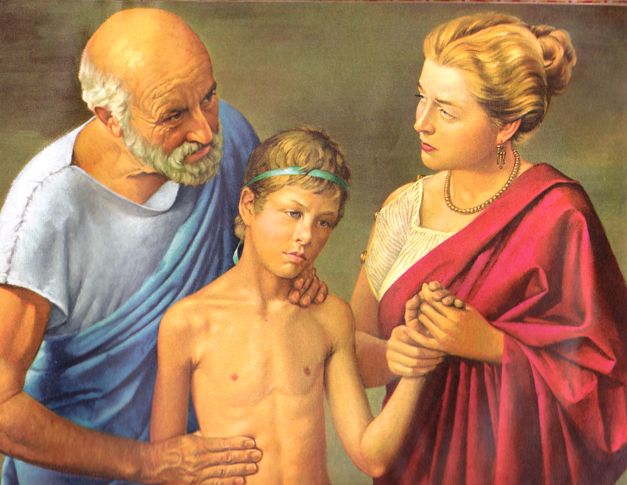
Hippocrates who lived almost 2500 years ago is pretty much accepted as being some sort of a 'father of modern medicine'. At least the Western model of modern medicine. After all our Physician's Pledge is heavily modelled after the Hippocratic Oath. Among other things, Hippocrates, or at least the Hippocratic school has been credited with moving the practice of medicine away from superstition/dogma towards one more based on careful observation, and the positioning of the patient in a holistic context where he has an integrated relationship with his environment and the physician who is managing his disease. This line of thinking actually grew out of a medical philosophy that prevailed in the island of Kos where Hippocrates lived, and is collectively called the Koan philosophy.Wednesday, March 17, 2010
Cord blood banking - should you, or shouldn't you?
The International Society for Stem Cell Research (ISSCR) of which Dr Weissman is also head, was quick to point out that his comments referred to the sale of stem cell therapies rather than the banking of stem cells.
Friday, February 12, 2010
Singapore Medical Council's case against Dr Devathasan overruled!
See my previous post on this.
Monday, February 1, 2010
The painless piles fix squabble
Dr Peter Goh had apparently made claims through an advertisement about the Transanal Haemorrhoidal Dearterialization (THD) being a 'painless' procedure. This claim brought forth a response from the Presidents of the Society of Colorectal Surgeons (Singapore) and the ASEAN Society of Colorectal Surgeons, as well as a past President for the Singapore Society. It wasn't very clear in the report, but it appeared that these latter surgeons had countered Dr Goh's advertisement by writing a letter, apparently to the newspapers.
It just seemed strange that the surgeons had chosen the newspapers as a means to settle a professional difference of opinion. If Dr Goh was making a false claim in the advertisement, shouldn't the Societies make their complaint to the Singapore Medical Council?
Curious...
Wednesday, January 13, 2010
Dr Devathasan's run in with the Singapore Medical Council
It is also interesting as one of the chief complainant is apparently a 'professional rival'. Dr Devathasan was supposed to have offered an unproven therapeutic option to a 77 year old woman. Remember Para 4.1.4 of the SMC ethical guideline?
Curious.
A number of questions need answers:
a] How does the SMC decide if a therapy is 'unproven'. I have pointed out in previous postings that many doctors offer unproven therapies, in the form of off-label prescribing of drugs, various untrialed medical devices etc. Why was Dr Devathasan singled out?
b] What would constitute a 'proven' therapy? How many trials and what quality of trials are needed?
c] What do we do about Tradition and Complementary Medicine practitioners who are free to make outlandish claims and offer a host of unproven therapies..... some of which may be actually 'endorsed' by the Minister of Health. So if TCM practitioners are championed because they offer unproven options which 'complement' proven western remedies, why is it wrong for Dr Devathasan to do so?
I am all in favour of a greater level of scrutiny of how doctors behave, but SMC need to show it has a rational system in place, and not just engage in random cherry picking of cases to prosecute.
Tuesday, January 12, 2010
The Singapore Medical Council gets new dentures......
In the midst of all this, the news that the Singapore Medical Council gets increased powers to act against errant doctors. Great news, I think. Unlike many of my colleagues who resent this intrusion into their professional lives, I think this empowerment has long been overdue. In the current overheated environment for commercialized medicine, more regulation is preferred over less.
The fundamental question remains - will this empowerment nudge the SMC to go down the more difficult road of acting against the big fish peddling false cures and promises, who may happen also to be influential colleagues, or will they just continue to busy themselves chasing after low lying fruits such as GPs with MC misdemeanors and those who sell anxiolytics?
Saturday, September 26, 2009
Slimming pills - The Sunday Times picks up the cudgel
The issue of slimming pills gets elevated to editorial status in today's Sunday Times. Entitled "GPs' Unethical Fat Gains", it screams that it is 'time to wield the stick!'.But while I share in the sentiments raised, there are a number of problems.
Firstly, as the title of the editorial points out, this is essentially a problem of ethics. Prescribing slimming pills inappropriately is not really a problem of a legal wrongdoing. This is lack of professionalism and unethical behaviour, but not anything that can be easily whacked by a big stick. The HSA regulates the product, so it only goes after those who market products inappropriately, or who imports and sells unlicensed products. Correspondingly, it does not regulate medical practice.
The body that is supposed to regulate ethical and professional behaviour of doctors, is the Singapore Medical Council. This august body however, appears to have a reluctance to act against members for issues like this. Off-label prescribing is however, legally allowed, and unethical behaviour is much harder to prove. Yet, I believe, if the SMC wishes to retain its professional credibility in the eyes of the public, it will need to find some way to deal with problems like this. It cannot be that when the public can recognize a practice as unethical, that the Council would prefer to look the other way.
So the ball is really in the SMC's court.
The related problem is that this is a really big ball to kick around, and nobody knows how the ball of yarn will unravel when you start tugging at the loose end. The problem is not just about slimming pills, but deeply entwined with a whole host of issues related to doctors offering treatments that have not been proven. I have posted extensively about this before. Off-labelling prescribing is just one manifestation of a range of unethical practices. Para 4.1.4 of the SMC ethical guideline makes its ethical position very clear :
"A doctor shall treat patients according to generally accepted methods and use only licensed drugs for appropriate indications. A doctor shall not offer to patients, management plans or remedies that are not generally accepted by the profession, except in the context of a formal and approved clinical trial."
Is it not apparent to the SMC that such practices are unethical?
So my challenge to the SMC is this - either amend your ethical guidelines, or find some way to deal with this. Looking the other way is not an option. The SMC should see that it has an increasingly critical responsibility to the public as Singapore gears up to be a medical supermarket.
Friday, September 4, 2009
Off-label use of drugs - why the concern

All modern pharmaceuticals are subject to rigorous testing before they are allowed to enter the market place. Pharmaceutical companies are required to show good evidence of efficacy and safety for the dosages used and for the specific clinical conditions they are meant to treat. Consequently, when they are finally licensed into the market place, they carry a product label listing the specific disease indications for which claims have been validated.
Off-label use of the drug occurs when drugs are used for indications that have not been tested for. Hence the implications are that there is really no evidence other than anecdotal ones, that using these drugs in off-label situations will be effective and safe.
Off-label drug use is not illegal, but the US FDA prohibits the promotion of off-label use. The reason for this relate to the concern that pharmaceutical companies tend to gain market access by initially testing their drugs in a very narrow and specific way and can therefore show that the drugs are sfae and efficacious. Once the drugs are licensed, a host of off-label uses are then directly or indirectly promoted. For many drugs, the off-label uses may be even more lucrative than the labelled uses. In this Canadian report, approximately 25% of all prescriptions may be off-label prescriptions. This number is however decptive as the actual figure may be higher in different clinical situations. It is particularly prevalent in paediatrics, oncology and psychiatry. It is particularly problematic for expensive prescribed drugs.
In recent times, some major players have been caught. In Jan 2009, Lilly had to pay out US$1.4Bn for promoting off-label use of their drug Zyprexa. In 2004, Pfizer itself pleaded guilty and had to pay out US$430million for promoting their drug Neurontin. I imagine these are but the tips of the iceberg in the pharmaceutical industry given the attractiveness of the off-label market.
But what, you may ask, is the problem with off-label use?
Well, the main problem is that every medicine we use have been licensed only for very specific conditions for which they have been extensively tested for safety and efficacy. This evidence is vitally important for the protection of the patient consumer. Off-label use of drugs imply that drugs can be marketed for conditions for which there is no evidence of safety or efficacy. If this level of ambiguity is acceptable for medical therapeutics, then why bother with drug licensing in the first place? Surely the patient-consumer has to be treated with more respect and consideration.
Doctors have a legally sanctioned ability to use drugs according to their clinical judgement, and in an off-label situation, but this practice should be covered by the SMC guidelines which make it clearly unethical if the doctor provides unproven therapies, other than part of a clinical research protocol.
Thursday, September 3, 2009
The Pfizer US$2.3Bn fine,... and off-label use of drugs
But this is unlikely to curb such unsavory practices. Pfizer, the largest research based pharmaceutical company (revenue of US$48.2Bn in 2008) has been cited as a repeat offender.
The incident highlights the growing pressures on pharmaceutical companies to push their drugs, often beyond the original proven indications just to grow the size of the pie. Drug development is a very scientific but expensive process and when drugs are licensed into the market place they are registered only to be used for the indications for which they have been tested. Companies often encourage doctors, indirectly and sometimes directly, to consider using their drugs for unproven indications. Use of the drugs in unproven situations, are termed off-label use. This is a very cheap and convenient way to generate better returns on their research investments, because you only need to invest in testing for one indication, but maximize returns by encouraging market use for a number of other unproven conditions.
So Pfizer was caught red-handed.
But what about other companies? I wonder what the HSA is doing about this problem. How does it police the pharmaceutical companies here in Singapore with respect to this? No point just citing the regulations. We need to know what is actually being done to curb this.
In my earlier post, I highlighted this as an ethical problem facing doctors. The SMC ethics guidelines specifically ruled against use of drugs for unproven indications. But we know it happens. And I don't think the SMC is really doing anything about it.
Saturday, August 15, 2009
Ethical conundrums?
Two clinical situations appear to violate this principle:
a] The use of a medicine for an indication that has not been approved by the Health Sciences Authority (HSA). All medicines marketed in Singapore are licensed only according to approved indications. In any other situations, these would be considered 'off-label' use. In most cases, these indications have not been approved because no clinical trials have been done for these indications and therefore there is no proof of their clinical efficacy, and importantly, there is no evidence of their safety. However, doctors very often use these medicines for indications outside approved indications even if no evidence exists of their safety and efficacy. Technically, these doctors using drugs in an 'off-label' capacity would not be treating patients according to generally accepted methods, and are not using drugs for appropriate indications. And as these treatments are most often not offered in the context of a clinical trial, their use would place these doctors in violation of Para 4.1.4.
b] New surgical procedures. Surgical procedures, unlike, new drugs do not require to be clinical trialed before they are applied in the operating theatre. Hence, there is actually no proof of efficacy or risks. Surgeons remain quite free to offer anything they come up with, and can make fanciful claims of success without need to show proof of their claims. Too what extent are these 'new procedures' a remedy 'generally accepted by the medical profession'? It is hard to tell. The Singapore Medical Council generally looks the other way when it comes to doctors making outlandish claims about such new therapies.
The question I have is why publish guidelines such as Para 4.1.4, when it is not the intention of the SMC to consider the above as violations?
Perhaps the patient public should raise a few complaints where these are concerned to prompt the SMC to review their guidelines.
Friday, August 7, 2009
Stem-Cell challenge for the Singapore Medical Council

I must admit I don't know too much about these fancy therapies but a number of bizarre and confused things pop up in the reports:
a] The inconsistent picture of whether these were offered as part of a clinical trial. Both Dr Wong himself and Dr Eugene Sim of Parkway, offerred that these were not part of clinical trials, yet Dr Sim said that these were approved by the Parkway ethics board and the HSA (which would only happen if they were formal trials).
"We don't talk about clinical trials. We're not reducing people to digits and statistics. We treat people as a whole. I don't think like most doctors do. I'm different. Singapore doctors don't believe that stem cells can be used to delay ageing. They're very conservative and feel that stem cells should be used only in leukaemia and other incurable diseases."
Tuesday, July 28, 2009
Singapore Medical Council's ongoing battles
I personally don't have have any objections to it although many of my colleagues are resistant to the idea. I don't really subscribe to the argument that issues are so complex difficult for non-medical people to grasp. I think that's a lot of bull. It might have been true in the past when the level of education was low, and when medical issues were seldom discussed in public. This is no longer the case. Medical issues are now widely discussed and there is a fairly good understanding of medicine and bio-medicine outside of the profession. In fact the converse might be true, that many medical issues are now so inter-disciplinary and technologically complex that even doctors themselves have difficulty grasping all the implications of the cases.
One additional issue for some of my colleagues to consider is the Physician's Pledge which compels each physician to "respect my colleagues as my professional brothers and sisters". Although well meaning, the pledge effectively signals a closing of ranks around professional colleagues who are effectively 'in the family' as professional brothers and sisters.
But having said that, a number of problems plague this discussion. The chief one for me is, why single out the medical profession? I think the medical profession has been the most transparent and open with regards to the working of its disciplinary tribunal. It has probably been the most scrutinized and commented upon. Regardless of any perceived deficiencies, it has functioned 'well' so far. So why the sudden, almost urgent need to reform the system? Does the Ministry of Health know something it is not telling us? Has there been any evidence that the system is not working? And on a more Machiavellian note, are there any other forces at play that are perhaps driving this relentless drive to change the status quo?
Perhaps it might be better all round if this reform was undertaken as a cross-professional effort, so that the reforms at the SMC can be seen as only the first step in reforming all the professional guilds.
Thursday, July 9, 2009
The Physician's Pledge
That made me sit up a bit....
The Singapore Medical Council implemented a Physician's Pledge for graduating doctors in 1995. This was kinda inspired by the Hippocratic Oath, but is actually very similar to the Physician's Oath (adopted by the General Assembly of the World Medical Association, 1948 and amended by the 22nd World Medical Assembly, 1968).
The SMC Physician's Pledge reads:
"I solemnly pledge to:
dedicate my life to the service of humanity;
give due respect and gratitude to my teachers;
practise my profession with conscience and dignity;
make the health of my patient my first consideration;
respect the secrets which are confided in me;
uphold the honour and noble traditions of the medical profession;
respect my colleagues as my professional brothers and sisters;
not allow the considerations of race, religion, nationality or social
standing to intervene between my duty and my patient;
maintain due respect for human life;
use my medical knowledge in accordance with the laws of humanity;
comply with the provisions of the Ethical Code; and
constantly strive to add to my knowledge and skill.
I make these promises solemnly, freely and upon my honour."
I suppose the interpretation of that pledge will revolve around what we understand to be meant by "dedicate my life to the service of humanity" and "make the health of my patient my first consideration". What do they mean to graduands, and do those statements actually compel doctors to put their life on the line?
I know this pledge may be just words mechanically uttered by some graduands, but it is a solemn pledge and meant to be taken seriously.
The SMC's Ethical Code and Ethical Guidelines makes a more explicit statement in Para 4.1.7.2:
"A doctor shall be prepared to treat patients on an emergency or humanitarian basis unless circumstances prevent him from doing so."
But I suppose that still requires us to interpret what it means by being prevented from doing so.