
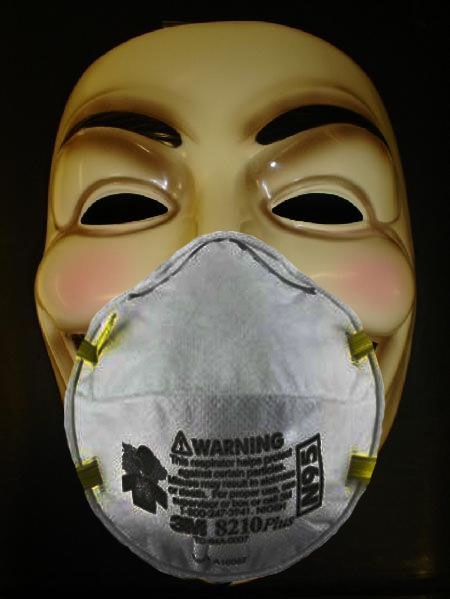
Tuesday, July 14, 2009

Water, water everywhere..... PUB's success.

While we are on the subject of water, I just want to share my thoughts on Singapore's water management.

I think of all our agencies here in Singapore, PUB clearly takes the prize. Once merely a utilities manager, PUB has become a world class standard bearer for water management.

I have travelled round the world and I can confidently state that I know of no other place in the world where I can happily drink straight from the tap. Not just safe drinkable water, but actually clean pleasant tasting water. And all this considering we have little ready natural water resource.

In just a few decades, PUB has not only made us water sufficient, and has put Singapore on the map as a global leader in water management.

PUB, you've done us real proud.

Which makes it all the more ironic that we have so many bizarre practices that seem to deny the reality of our access to clean drinking water from taps. Why do people buy bottled water, and pollute the environment with more plastic bottles? Why do restaurants not serve tap water, or make it seem so expensive to turn on the tap for a glass of tap water?

It's time we changed our mindset.

Keep it up Sparklette!!

Sparklette Veron, peeved by restaurants who do not serve water, has published a list of such restaurants. I must admit I did not know of her list until the Sunday Times made it known. And my response? Hoooray for the gutsy gal!

If you want to view her list, go here.

I have to confess to being one of those ‘cheapskates’ who get really irate when restaurants don’t serve water. To me it’s just lack of common courtesy, and the restaurant that cannot even extend that courtesy to its customers, are really signalling what they think of their patrons, and do not deserve my business.

I have actually walked out of restaurants before on being told they cannot serve plain tap water.

Just plain no manners.

I would really encourage as many people as possible to do the same….and to make a big issue of it before they leave.

Veron, you go girl!!

And to that restaurant mentioned in the Sunday Times.... you are just a forkettable eating place.

Sunday, July 12, 2009

Managing and Reducing Uncertainty in an Emerging Influenza Pandemic

Interesting comments from the recent copy of the New England Journal of Medicine.

I excerpt some paras for your reading. Can go to the original by Marc Lipsitch from Harvard School of Public Health above if you want to read full article.

"Crudely speaking, the (H1N1) case fatality ratio thus appeared to be 0.2%, near the upper end of the range for seasonal influenza, and superficially, this statistically uncertain estimate seems remarkably accurate given the data available on May 27, by which point there were 11 deaths and 7927 confirmed cases (a case fatality ratio of 0.14%)."

"Public communication of risk and uncertainty will be critical. It has been suggested that the existing criteria for moving to World Health Organization pandemic phase 6 (sustained transmission in multiple geographic regions) should be modified to incorporate a judgment that the world's population is at increased risk. We would argue against conflating assessments of transmissibility and severity in this subjective way, which risks adding to the confusion faced by decision makers and the public. Rather, the global extent of a pandemic should be described objectively and should be just one factor in decisions about how to respond."

"As we adjust our mitigation policies, there will be a continuing need to make decisions without definitive estimates of severity. For example, the decision to move from production of vaccine for seasonal influenza to that for pandemic influenza will need to be made in the next month or two. Similarly, the United States will need to decide soon whether to use adjuvanted vaccines to protect more people with a given amount of antigen, although such vaccines are not currently licensed in the United States. As always, however, the main losers from delays in such decisions are likely to be developing countries, which will have less access to vaccine while probably suffering the greatest clinical impact from this new pandemic virus."

Infection Control Authority for Singapore?

Singapore has an Infectious Diseases Act. This was enacted by Parliament in 1976 and came into force on 1 Aug 1977. This essential piece of legislation is jointly administered by the Ministry of Health and the National Environment Agency (NEA) and deals with the prevention and control of infectious diseases in Singapore.

I remember hearing talk some time ago about the establishment of a regulatory agency that can more specifically deal with infections - a kind of Infection Control Authority. Currently it seems to straddle two Ministries, which may or may not be a good thing.

I think having a fully dedicated Authority to deal with infection control in Singapore is long overdue, and in fact seems to be looking more and more urgent. I hope the government will not delay too long in setting this up.

Saturday, July 11, 2009

H1N1 (aka American flu) - dying embers of a spurious fire

So Minister Khaw reckons the battle for H1N1 is almost over.

I think everyone is just kinda hoping that everything will blow over quite quietly with as little egg on people's faces as possible.

I do agree though, it's true that we should be looking to learn whatever lessons we can from this global event. And I really hope they will do it honestly and not sweep stuff under the carpet, in the interest of looking good.

Some lessons worth learning, I think:

a] How did the world get it so wrong?

Quite clearly the virus is nowhere is virulent as was initially made out to be. No, Minister Khaw.... the virus isn't getting weaker. It wasn't that 'strong' in the first place. Somehow data collected in those early days just massively inflated fatality risks of the novel flu.

We need to seriously look at how global flu data is collected, and have a better idea of credibility of data when they do appear.

b] How do we manage public health information in the context of a pandemic?

I don't agree with Minister that the whole thing was managed well and that the public has done well in managing the pandemic. I think the public did try their best in dealing with the very confused signals appearing. But the whole thing could have been managed much better. All those messages about how serious this whole thing was, just wasn't very convincing to much of the public, and very early became viewed as a massive nuisance that people had to bear when few were at all convinced it was a serious flu pandemic. Now that it is blowing over without much of a fanfare, is just confirming in everyone's minds, that this has been a complete overreaction.

I know that this is being said with the wisdom of hindsight, but I think the uneventful outcome wouldn't have been very different even if nothing much had been done in the first place. So I don't think there is any credit due anyone, that not much damage had been done by the novel virus.

I am not making these comments flippantly, because I think it is very important to be honest about these deficiencies because the next pandemic might well be a real one....and a bad one at that. We need to have more confidence in the data collected, and have a proper and accurate diagnosis of risks as early as possible. And we need real decisive leadership to know when to turn off the alarm, when we recognize that it is false. It goes without saying that in the management of a real pandemic, a very strong and clear buy in by the public is critical in order to make pandemic management effective. This did not happen.

c] Resourcing for the pandemic management was woefully inadequate.

Surprising especially as we had struggled so much through the SARS experience. So it is strike two, ...but we are not quite up to scratch.

BMI (Body Mass Index) for Asians

So, the Brits are finally coming round to the realization that Asians are not Caucasians and should not measured by the same yardstick. At least where the BMI (Body Mass Index) is concerned.

I mean, duhhh........ we have known this for a long time already, haven't we? What took them so long?

Four years ago, the WHO Expert Consultation in Singapore already recommended new and more appropriate guideline for Asians.

BMI (kg/m2) for Adults...Health Risk
27.5 and above...High Risk
23 – 27.4...Moderate Risk
18.5 – 22.9...Low Risk (healthy range)
Below 18.5...Risk of nutritional deficiency diseases and osteoporosis

You can use the Health Promotion Board calculator to calculate your BMI.

:( Mine is 24.8.
Got to stay off that tiramisu.

Thursday, July 9, 2009

The Physician's Pledge

The recent discussions about whether a doctor is morally compelled to put his life on the line in dealing with pandemics and such, if nothing else, did highlight the level of ambiguity that exists in doctor's minds with regards to their moral obligations under such circumstances.

One comment in Angry Doc's blog pointed out: "I don't remember ever making any oaths to say I would die for my work."

That made me sit up a bit....

The Singapore Medical Council implemented a Physician's Pledge for graduating doctors in 1995. This was kinda inspired by the Hippocratic Oath, but is actually very similar to the Physician's Oath (adopted by the General Assembly of the World Medical Association, 1948 and amended by the 22nd World Medical Assembly, 1968).

The SMC Physician's Pledge reads:

"I solemnly pledge to:

dedicate my life to the service of humanity;
give due respect and gratitude to my teachers;
practise my profession with conscience and dignity;
make the health of my patient my first consideration;
respect the secrets which are confided in me;
uphold the honour and noble traditions of the medical profession;
respect my colleagues as my professional brothers and sisters;
not allow the considerations of race, religion, nationality or social
standing to intervene between my duty and my patient;
maintain due respect for human life;
use my medical knowledge in accordance with the laws of humanity;
comply with the provisions of the Ethical Code; and
constantly strive to add to my knowledge and skill.
I make these promises solemnly, freely and upon my honour."


I suppose the interpretation of that pledge will revolve around what we understand to be meant by "dedicate my life to the service of humanity" and "make the health of my patient my first consideration". What do they mean to graduands, and do those statements actually compel doctors to put their life on the line?

I know this pledge may be just words mechanically uttered by some graduands, but it is a solemn pledge and meant to be taken seriously.

The SMC's Ethical Code and Ethical Guidelines makes a more explicit statement in Para 4.1.7.2:

"A doctor shall be prepared to treat patients on an emergency or humanitarian basis unless circumstances prevent him from doing so."

But I suppose that still requires us to interpret what it means by being prevented from doing so.