Showing posts with label medicalschool. Show all posts

Monday, July 2, 2012

Selling off our heritage: How our medical school disappeared. Happy birthday, our grand old Alma Mater!

Few will, or will care to remember that our present Medical School and indeed, the National University of Singapore was born July 3rd, 1905. So sad.

Towards the end of the 19th Century, Singapore was still training "doctors" by sending qualified students off to Madras. In 1904 a tin trader, Tan Jiak Kim collected the necessary funds and spearheaded a move that would eventually lead to the establishment of our own true-blue Singaporean medical school. This was initially called the Straits Settlements and Federated Malay States Government Medical School.

The building it operated in was actually an old women's asylum, located somewhere behind the current grand looking College of Medicine Building at Sepoy Lines (Ministry of Health). The precious heritage building is no more there because in the early 80s, after the medical school relocated from her birthplace to Kent Ridge, the huffy Ministry of Health decided that such useless heritage was not worth preserving and promptly flattened the historical building - replacing it with of all things, a car park!

Ever forward looking, the National University of Singapore seemed also little interested in heritage issues. When in 2005, the Yong Loo Lin Trust donated a "transformational gift" of $100 million to the medical school, the school threw heritage out the window and gratefully renamed itself the Yong Loo Lin Scool of Medicine. It simply didn't matter that no one actually knew who Yong Loo Lin was.

A hundred million dollars was apparently the biggest gift the University had ever received. But it was in truth, a relatively small sum compared to the operating budget of the university. One wonders what would happen now if Gigamole donates $105 million to the University. Can I get the medical school named after me?

It is so easy to sell off our heritage. Sad, and tragic, because it is our heritage that ties us together, and makes us who we are.

But Gigamole remembers. So here's wishing you a happy happy birthday, our dear Alma Mater. Though I am not sure where you are now. Sadly, I don't think the NUS or YLLSOM will remember your birthday today. Last I checked, nothing on their websites.

Monday, March 26, 2012

A practice-oriented, teaching medical school? Why not?

Minister of State Lawrence Wong recently speaking about a more diversified university environment, suggested that that could be a place for the Singapore Institute of Technology to develop into a practice-oriented teaching university. A good idea, though not an entirely novel one! After all, such universities exist successfully elsewhere. It is not even new in Singapore, since the Nanyang Technological University (NTU) was very much such a university in the early years..... until it got sucked up into the academic research game.

Our universities in Singapore have for the most part lost sight of the core objectives which are really about the  education of the next generation. These objectives have been subverted by the mad rush to play the ranking game, and to crank up the research KPIs. As a result, the universities of today all strive to look like poor simulates of high end research institutes, and generally allow their educational missions to waste away. Likewise our medical schools.

One could ask the schools who they think they are producing doctors for? The research institutes? To become award winning clinical scientists? To engage in translational research? Not that these are not important, but surely they cannot be the core objectives of the medical school? Yet, in the medical schools, it is almost forgotten that the main stakeholders are the public clinics and hospitals.

I am convinced that we need to return to basics and re-focus our energies and resources on producing good and caring practitioners who will serve and support health care delivery. We do not necessarily need the best brains for the medical profession. We don't need them to be top researchers. We need the best hearts! And we need them to care for the sick, the elderly and the handicapped.

So the MoS Lawrence Wong should consider extending idea of the practice-oriented teaching university to the training and education of doctors as well. To my mind, it is long overdue.

Saturday, October 22, 2011

The culture of bandwagons, whale-ariums and the authorship mass-graves

Bandwagons are great things to have in the neighbourhood, but they are not something that Singaporeans are very familiar with. The closest we have to bandwagons would be the floats that used to be paraded across the grandstand during National Day parades. These floats would generally profile the organization and trumpet its most recent achievements. But few personalities ever get to reap any reflected fame by jumping on these bandwagons. Another version of the bandwagon is the local 歌台 ge tai's. Here's where aspiring politicians sometimes flaunt themselves during 'hungry ghosts' season hoping for some public attention.

The version of the bandwagon seen in academic circles is that associated with 'successful' and high profile researchers (or research). If you have one in the neghbourhood, you'd be very blessed indeed. By jumping on such a bandwagon, aspiring wannabe researchers collect instant fame and fortune. In the past, when few bandwagons were apparent in the local scene, we used to have to send aspiring researchers to high profile universities or research insitutes where they get access to high profile bandwagons. These researchers then return covered with reflected glory and certainty of an equivalently high profile career.

Nowadays of course, there's is a lot more money floating around and we can afford to bring in some of the bandwagons instead of sending our novice researchers out to them. Net benefit to us, as not only our young researchers but Singapore gets to bask in the limelight of these bandwagons. In order to not look so crass and obvious, the bandwagons have been camoflaged as travelling whales, as if we were recruiting for an oceanarium in Resorts World Sentosa.

It is of course, nice to have whales in the neighbourhood. Up to a certain point.

It's unfortunately been somewhat overdone. Nevermind that the rest of world also play this game. But the game of cultivating whale-ariums has taken on a life of its own, complete with its own set of KPIs. Senior management of universities, research institutes and other high profile research establishments spend enormous sums of money bidding for top performers for their whale-ariums. These senior management KPIs are based on how many whale Michael Jacksons (or Lady Gaga) they can attract. Don't worry about whether there is real transfer of technology or not, just make sure the whales perform, and as many as possible get to ride the whale.

Too cynical Gigamole is being?

Well, look at our grant agencies, and see how they look disdainfully down on local content. Woe betide your chances should you not have a significant performing whale leashed to your proposal, and are not part of one of these existing whale-ariums. Your career on the other hand, is pretty much secured for life if you can convince the grant agencies to advance you enough credit for you to lease your own whale-arium (otherwise called a programmatic grant) with at least one performing whale on board. All you need to is to sit back and collect the gate fees (otherwise known as research credits).

Correspondingly an entire culture has grown around the bandwagon/whale-arium 'ge tai'. The output of such whale-ariums has become a major KPI. Hence chalking up such research credits through being involved in publications can make or break a young scientist's career. Publication authorship lists have grown exponentially over the years. Endorsements of major performing whales become essential in providing gravitas to these publications. This gravitas is important because it provides better odds in getting your publication into major journals. Such heavy publications are referred to as having 'high impact' and secure much credit for the authors on these publications.

The university actually encourages the formation and farming of these whale-ariums.

Academic staff performances are graded according to their abilities in securing funding to lease a whale-arium or a significant bandwagon. Individual local efforts are frowned upon, regardless on whether they are meritorius (in fact a medical school Dean has been famously quoted as having disparaged his staff "How good can you be?"), or not. Involvement in journal publications are extremely important in the KPIs of academic staff. Here again the university/medical school also encourages long authorship lists to develop. It's a no brainer. Everybody stands to gain from long authorship lists. It's just a mathematical reality. More people benefit from a single publication. Young staff without an established reputation gets ahead on the (coat) tails of senior and more prominent whales. Senior academics without much research output get free rides on the backs of their more energetic and younger colleagues. The university glows with pride as all this light gets reflected back and forth. Of course the university ranking gets to climb a few notches.

Too cynical Gigamole is being?

Well, look at how the medical school computes research performance credits of it staff. Performance credits get elevated disportionately of the actual impact factors of the journals. These credits are freely awarded to co-authors without the main authors losing out on their own personal credits, resulting in total credit inflation. Hence total credits often exceed 100% of the expected credit score of any publication. Co-authorships are tacitly encouraged even if real participation is minimal. In fact, mathematically, it makes more sense to be a nominal participant on these bandwagons than trying to develop your own ideas and independant research.

Journals are supposed to require authors to decalre their actual involvement in any publication. But they seldom do. According to Wikipedia:
"In the medical field, authorship is defined very narrowly. According to the Uniform Requirements for Manuscripts Submitted to Biomedical Journals, in order to be considered an author, one must have satisfied all three conditions:
Contributed substantially to the conception and design of the study, the acquisition of data, or the analysis and interpretation
Drafting or providing critical revision of the article,and
Provided final approval of the version to be published
The acquisition of funding, or general supervision of the research group alone does not constitute authorship. Many medical journals have abandoned the strict notion of author, with the flexible notion of contributor.
"

I have never seen these criteria being applied.

Wikipedia further elaborates:
"the U.S. National Academies specify 'an author who is willing to take credit for a paper must also bear responsibility for its contents. Thus, unless a footnote or the text of the paper explicitly assigns responsibility for different parts of the paper to different authors, the authors whose names appear on a paper must share responsibility for all of it.' "

Really?

Let's watch the Alirio Melendez story unfold as the investigations continue. The Straits Times recently reported on another investigation of a prominent whale-arium.

These whale-ariums have lives of their own. Time to re-boot the system?

Thursday, October 20, 2011

Bandwagons, clowns, whales and massgraves - perspecting the Alirio Melendez story

The Alirio Melendez story broke sometime last week. In fact the story had for some time, apparently already been quietly whispered about along selected corridors of the YLL Medical School campus. There have been accusations about fabrication of data, and major scientific papers have been withdrawn and investigated. I really don't want to presume I know too much about the case, nor about Professor Melendez's guilt or innocance. But certain things are interesting to reflect upon.

The phrase 'jumping onto the bandwagon', comes readily to mind. The phrase, according to my fav source for info, Wikipedia, apparently came about because of activities related to a less than famous clown-politician in early American history. Apparently he had been extremely successful in exploiting the mass media technology platform of his time, the bandwagon, to exhibit his political ambitions. Soon every other politician wanted to jump onto his bandwagon to share his spotlight. Thus arose the disparaging phrase 'jumping onto the bandwagon'.

What's all that got to do with us?

Well, observers of the Singapore approach towards biomedical research excellence cannot fail to notice that we spend a lot (in fact massive) amounts of money on bandwagons. Some have disguised these bandwagons as whales so as not to be too obvious. Bandwagons are obviously quite useful when you want instant fame and recognition, but it is not based on reality or substance. Coming from our Singaporean success on planting instant trees there is a fallacious thinking among some that there is an 'instant success' equivalent for biomedical research. So we rush about frantically planting those instant whales.... sorry, I meant trees.

Research bandwagons have however been extremely successful in transforming the Singapore research reputation. Suddenly we have a Nobel Prize laureate among us (transplanted, of course). Lots of whales (recently some apparently in migratory mode). And suddenly our local researchers look good, and get to cavort on the world stage. Can't complain too much....since as local guppies we've had many covert opportunities to grow fat off some of the crumbs falling from the mouths of whales.

But the problem is fame gotten from being on bandwagons is not necessarily real, and can be fleeting. And when the bandwagon topples - voila, you have an instant mass grave.

It was an interesting exercising looking up the Melendez publications generated in Sinapore. Anyone can do it. Just go to Pubmed and search for 'Alirio' 'Melendez' 'Singapore'. Or if you are lazy, just click here. You will find a listing of 50 publications generated during his time in Singapore. These publication date between 2002 and 2010.

It was very interesting going through this publication list because you find a lot of research associations in the authorship lists. Apparently all these papers are now under investigation. And all these authors now become somewhat tarnished by their association with Melendez because of these accusations of academic dishonesty. Again, I don't want to presume the outcome of the investigations, and I do hope that it will not uncover any widely endemic dishonesty within the scientific community. But the authorship list for Melendez papers reads almost like a Who's Who in the medical school, and includes heads of departments, Vice Deans and prominent individuals in the office of the NUS Vice President. Interestingly Prof Barry Halliwell, who is NUS Deputy President (Research and Technology), and who has been cited as fronting the investigation into the Melendez publications is himself associated with at least 2 Melendez publications.

Mass graves? These tend to develop when over-populated bandwagons fall over. But more about this in another post.

Friday, September 23, 2011

The Singapore Medical Council Physician's Pledge - respect for teachers

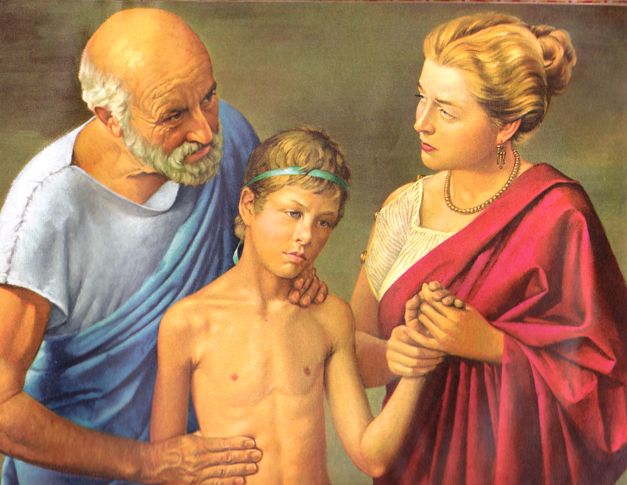
Upon graduation, all newly minted doctors in Singapore have to take the SMC Physician's Pledge. The pledge is our local adaptation of the Hippocratic Oath and the similarities are obvious if you lay them out side by side.

In the original Hippocratic Oath, the very first para addresses the issue of respecting your teachers. It reads :

"TO RECHON him who taught me this Art equally dear to me as my parents, to share my substance with him, and relieve his necessities if required; to look up his offspring in the same footing as my own brothers, and to teach them this art, if they shall wish to learn it, without fee or stipulation; and that by precept, lecture, and every other mode of instruction, I will impart a knowledge of the Art to my own sons, and those of my teachers, and to disciples bound by a stipulation and oath according the law of medicine, but to none others."

I guess it was something very important to Hippocrates, or at least to the Hippocratic School.

Our SMC Physician's Pledge more succinctly states "give due respect and gratitude to my teachers". That it is placed second only to "dedicate my life to service of humanity" but before all the other practice related oaths also indicates the relative importance of such a value.

Unfortunately though, as undergraduate medical teachers, few of us observe the expression of this in the hallowed halls of learning. In fact a common refrain among medical teachers is that medical student behaviour is arguably the worst among the undergraduate population. They come late for class, talk, send text messages, surf the net, and play with their smart phones during lectures. And generally are somewhat lacking with respect to respecting their teachers. I do have to qualify that the above probably applies to only a section, and perhaps only a very visible minority of the medical student population. Yet it is a significant enough segment to create the impression that there is very little respect in the class for the teacher who is in front of them trying to start a lecture.

I have always wondered why this is so. Perhaps it is because the students have not yet been exposed to these noble values as articulated in the Physician's Pledge. It does seem a bit late to take an oath to respect your teachers only after you have graduated, and after having spent 5 years abusing your teachers. Perhaps the medical students ought to take a earlier version of the Physician's Pledge, a Physician's Pledge Lite, for example, that might encourage them to consider value systems they need to cultivate and express during their undergraduate years.

Some shrug their shoulders, capitulating to the idea that this bad behaviour is really just our local manifestion of the global modern 'Gen Z plus' university student phenotype. But I disagree. I have been to universities in Japan, Korea and even Taiwan where University and Medical School teachers are held in high respect and where students are appropriately deferential to their seniors and their professors. And it seems like the non-medical student classes in the NUS are somewhat better behaved.

Please do not get me wrong. I am not arguing here for blind submissiveness. I am all for a fiercely independantly thinking medical students. Students who can be clear minded and innovative enough to challenge traditional professional paradigms. But our students need to be taught that the development of independent and creative thinking does not mean a jettisoning of responsibility and respect for others.... especially their teachers.

So Minister Heng Swee Keat, please have a look at our universities and medical schools as well.

The new educational focus on values and character - a long overdue initiative

It was certainly refreshing to read of the new Education Minister Heng Swee Keat's take on the future strategic educational mission. Apparently the new mission will focus on values and character.

Great stuff! I hope this is not one of those empty promises that serve no other purpose than to look good in annual reports and glossy brochures.

For too long our educational system had fostered this mindless ultracompetitiveness to excel academically. It seemed like all that mattered was getting those As and distinctions. Those that couldn't fell by the wayside, as did the noble values of respect, integrity, discipline and selflessness. We have seen this precipitous moral erosion among the undergraduate and medical student population. It seemed clear to many that this decline in values among the university student population was largely due values and behaviours inculcated during the preceding 12 years of schooling. Many have been dismayed by the apparent lack of concern shown by the school and ministry leaders,many of whom were clearly motivated by chasing after those elusive academic KPIs.

Fancy pedagological approaches such as 'student centred learning' and 'the student as the customer' became cliched excuses for spoiling students and fostering negative student attitudes and behaviour.

So Minister Heng's position is to be applauded. Not only is it timely, but in my opinion, long overdue. But it is a difficult task and there will be many who will resist him. I certainly wish him and his Ministry well, and will certainly go all out to support his initiatives. We have too much to lose if he does not succeed.

Saturday, April 30, 2011

The General Elections - die die also must say

These are interesting times. As some have already pointed out, this elections will prove to be a watershed one. A milestone. Whatever the outcome and no matter how much MM Lee wants to downplay it, I believe the consequences will be immense and the results will significantly shape the Singapore of tomorrow.

I am not a political commentator and generally have stayed away from directly commenting on political issues. Maybe indirectly shoot some arrows, but generally I have been quite content to just grumble from the sidelines. I am generally not a political person. Afterall am I not a happy-happy beneficiary of the stable gahment that has allowed me to be educated and trained to be able to provide for my family as a medical professional? I am comfortably ensconced in Singapore society. What is there to really complain about? When I am overseas, who do you think I root for, and defend when others criticize developments in Singapore?

So the recent outpouring of apparent wrath against the ruling party in this 2011 elections seems a bit of a mystery to me. Has not the gahment of Singapore, achieved wonders in bringing a resourceless Singapore into developed nation status? We are the envy of many around the world. The little red dot is only little on the map; we punch way above our weight in the world. By any measure, we have a fantastic gahment here in Singapore.

Yet people are unhappy. Why? Minister George Yeo, MP for Aljunied accused the opposition for imposing an emotional burden on the voters, yet paradoxically, here lies the true emotional burden - that the electorate must struggle between supporting an otherwise effective gahment, and the feeling of heaviness and dissatisfaction, that somehow things are not as good as the official statistics tell us.

People feel marginalized and neglected. It is not that Singaporeans are xenophobic or hate foreigners, even though the tone of comments expressed during hustings may suggest it. No, Singaporeans are not xenophobic. It is merely the feeling that their own gahment appears to value foreigners more than its own citizenry. This is probably not true, but the perception is very pervasive. This is where I believe, the gahment has failed. It has failed in managing public perceptions and expectations with respect to immigration, foreign labour and economic growth. It is fantastic that our economy and GDP continue to chug along at a healthy rate, but the perception on the ground is that the benefits appear to accrue mostly to the elites and the wealthy in Singapore. The gahment's reach out to the poor, the weak and the marginalized is often grudging and calculative. Paltry sums considering the size of our budget surpluses and national reserves. Can we do more? Of course we can..... and please don't tell me this is tantamount to raiding our national reserves. MM Lee's comments about the elderly working till 85 was supremely insensitive although I don't think he intended it. Choosing to work till you are 85, is really not the same as being compelled to work to survive until 85.

Being in power, unchallenged power, for such a long period of our history has bred a level of complacency so that leaders do not feel that the public needs to understand or seriously discuss issues. The most expedient way of going where you want to go is unfortunately via a top-down dictatorial approach. This approach has been over-used. Has there been enough planning and discussions?.... Not much apparently.

In the biomedical area, this lack of planning and discussions have wreaked real havoc in the system. Take for example, the hospital clusters. We have over a period of 20 years gone through various levels of clustering, and declustering, and now re-clustering. Each Minister that comes along pushes a hobby-horse position. Hardly evidence of long term planning. Medical manpower planning? Hardly any, apparently - because we have flipped-flopped from too many doctors, to the present situation of being desperately short of doctors. Suddenly we require 3 medical schools..... of 3 different educational systems? This is planning? Almost overnight, the US residency programme was foisted upon all and sundry. If there had been any long term planning, it was far from evident. Medical education is now in a mess. We have an undergraduate and a postgraduate system existing side by side. We have flirted with problem-based learning, then discarded it. We have integrated and disintegrated the curriculum. And we have the really bizarre situation where our medical students are not expected to have studied biology. Duh? And we are expected to believe there is someone somewhere who is responsible for planning all this?

No one discusses this publicly because everything is driven from the top. Very heavily driven.

Foreign talent is critically important for us to push towards excellence. But without appropriate signals that policy makers are concerned about protecting the interests of our home grown and local medical/biomedical professionals, one cannot avoid feeling that the economic pie is not really for local consumption. The mass of biomedical and life science graduates and postgraduates we produce annually find it hard to find jobs in the sectors they have trained for, despite the very rapid expansion of the biomedical sector.

Whatever the results of the elections, there is no doubt they will be important. I don't think the PAP will lose the right to govern. But I think it is vital for the ruling elite to recalibrate its way of doing things... to relearn how to communicate with the people it seeks to lead. If they truly believe they are servants of the people, they must make this evident. And stop being just rulers.

Sunday, April 24, 2011

Selling off our heritage

Some 5-10 years ago, as if at a given signal we started all this nonsense about naming buildings and institutions after dignitaries and philanthropic donors. Now, I don't really care if they name new (or even old) buildings after people who give lots of money. Nor do I particularly care if they want to name institutions and buildings after local 'heroes' and prominent figures who have contributed much to our nation building. But naming established institutions after people who just give money is, I think, way over the top.

I beilieve the NUS was one of the first to lead the charge. The School of Medicine particularly. I for one, was aghast when heard they named the grand old School of Medicine after a Yong Loo Lin. 'Yong who?' was my first response. How could they? Here was my old alma mater, 100 years old, with a proud heritage.....gone overnight. Morphing unceremoniously into the Yong Loo Lin of Medicine. "Yong-who? School of Medicine?" . No consulation with staff.....or alumni. Talk about a top down approach. Many of my contemporaries had been equally appalled. A heritage sold. No matter how the School of Medicine insists on the continued heritage, there is no doubt it had all been destroyed by the stroke of a pen.

How much was the heritage worth? One hundred million bucks. Sounds big doesn't it? Until you realize how big the annual operating budget for the school is. Let me tell you one hundred million dollars doesn't really go very far. Consider for example, that the NUS operating expenditure is in the range of $1.5 billion.

And so we sold the hundred year heritage for a hundred million dollars. One million for each year. How callous, and tragic (not to even mention that the old original building of the medical school, the female asylum, had much earlier on, been bulldozed over to build a carpark!).

This was most certainly one of the straws that led to the final one for Dr Tan Cheng Bock. He finally resigned in exasperation from the board of Jurong Hospital when they decided to name the hospital after Ng Teng Fong, whose family had also donated some money.... some $125 million of it. Again while the sum may appear big, it is also small compared to the $1 billion the government is spending on the hospital.

So what gives....?

Seems to me that our idea of Total Defence includes the protection our heritage, because it is our heritage that holds us together and gives Singaporeans a sense of that common history and vision for the future. Seems to me that the selling off of our heritage for a paltry 30 pieces of silver is not working in our favour, and undermines all the effort in the building our total defence.

It is time to take stock.

Tuesday, April 19, 2011

Death of Physiology....and of medical education?

Hot on the heels of my preceding 'rant' on groupthinks and health/education, here is an article by a leading physiologist and Emeritus Professor in King's College, London, Prof RJ Naftalin. Needless to say our medical educational system is pretty much hurtling down this road to disaster.

I reproduce an abstract here, and the full article can be read at The Scientist

Opinion: The decline of physiology
Medical schools in the UK are teaching physiology courses primarily focused on clinical applications with much curtailed practical laboratory training to the detriment of medical education. Prof RJ Naftalin.


Clinicians now take a leading role in pre-clinical teaching, largely displacing pre-clinical scientists who are more in touch with basic physiological processes. Scientific content taught in the context of clinical problems omits much basic science, which is regarded as inessential digression from the clinical problems upon which the course is centred.

Another factor contributing to the decline of physiology courses has been the loss of physiology departments as a result of their merging with schools of biological, life, health, or medical sciences. Only one or two discrete academic physiology departments remain in the United Kingdom. Resource allocation within the preclinical schools, formerly controlled by academics working at the pre-clinical faculty or departmental level, is now centralized and controlled by senior administrators and clinicians. The financial and man power resources are redirected towards the more highly prioritized needs of the medical school rather than to science departments.

Monday, November 1, 2010

The NTU-Imperial College Medical School

So it's out in the open now, as NTU and Imperial College London signed an agreement to form Singapore's 3rd Medical School. Target is 150 students, which is quite substantial compared to the current 250-300 at the NUS Medical School.

Prof Stephen Smith is the Founding Dean designate for the new school. A gynaecologist, Prof Smith was the Principal of the ICL in 2004, and subsequently also became the Chief Executive of the Imperial College Healthcare NHS Trust.

The formation of the 3rd Medical School is being watched with considerable interests from those who have been involved with medical education in Singapore. How will it differ from the approach NUS had taken? So far the leadership have been saying all the right things. Exploiting existing strengths in engineering and business, the new Imperial College London-Nanyang Technological University Medical School (ICNMS), will focus on training good doctors "equipped for tomorrow's challenges".

All nice words.

Many are hoping it will not fall into the same trap that the other medical school did by over-investing in the clinician-scientist mission. No doubt we need clinician-scientists to fuel the biomedical industry, but this should not be the main mission of a medical school. Singapore needs good caring doctors who can look after patients - not doctors whose primary mission is to serve the biomedical industry. Many have felt that the NUS Medical School had so over-reached itself to pursue the research agenda that the medical mission had been severely compromised.

If the new ICNMS remain true to the educational mission, the worrying outcome may be that many committed medical educators may decide to jump ship for a school environment that is much more aligned to medical education and the training of good doctors.

Monday, October 18, 2010

Prof Su Guaning steps down as President of NTU

So after 8 rather tumultous years, Prof Su Guaning steps down as President of NTU.

It seems not to have been an easy time for him managing the transition between the past and the future. I guess it never is. But NTU has always seemed like it lacked the ability to learn from the 'mistakes' NUS made during her transition. It had clearly been a painful process for the NUS, and NTU proceeding half a step behind could have avoided some of the pitfalls that NUS appeared to have made, but somehow it did not, and in the process, generated a lot of unnecessary heat and heartaches.

Not a good thing when you want to cultivate supportive alumni.

So I wish the new President, Prof Bertil Andersson all the best, though I am not too hopeful as he seems to have developed a reputation for being far more brutal and cold in his approach towards academic excellence; perhaps good for university rankings, but not necessarily best for students and staff.

Do we need to be concerned that 3 out the 4 local universities have foreign Prezzies? Nahhh....It's not a big deal. Locals are not necessarily more considerate of local cultures and needs, since they can be just as cold and heartless in their pursuit of institutional KPIs.

I am actually far more concerned that all 4 of our varsities have missions to be at the top of their league. This is not necessarily a bad thing, but it means we will have no universities that cater to the average students who do not necessarily want to be Nobel Prize winners. Take for example, the medical schools we have. If all of our 2 + 1 medical schools strive to train clinical researchers par excellence, then who will train good doctors; doctors who care, but do not necessarily win academic awards, and chase fame and fortune?

Thursday, September 9, 2010

Islamic contributions to medicine

It is easy in today's world, especially when anything Islamic is receiving such bad press, to forget how important the Islamic civilization was in the development of modern medicine. While medieval Europe languished in darkness, it was the Islamic civilization that carried the torch for medical education, research and practice.

While we look to Hippocrates as a 'father of medicine', it was probably ibn Sina (Avicenna) who should best be regarded as the 'father of modern medicine'. But sadly, we remember Hippocrates and too readily forget ibn Sina.

Few also realize that the idea of hospitals ( although the word derives from the hospices of medieval Europe), was most likely copied in idea and design from the Islamic centres of excellence. There was licensing of physicians and the hospitals were sophisticated, well organized institutions that were way in advance of what Europe had. It was probably the returning Crusaders who brought some of these ideas back to Europe.

The practice of medicine was held to a much higher standard of ethics than was in Europe. The treatise by Adab al-Tabib (Conduct of a Physician) is well known, though not by those of us with a narrow European perspective of medicine.

He writes:
'If the patient and the one who serves him understand, then the physician describes the remedies to them and allows them to go on with the therapy If it is not understood, then he must, with his own hands, undertake the treatment that is necessary; he (i.e. the physician) does not explain anything to (the patient). In maintaining silence as to the diagnosis for one who would not understand, in case of error, it is better for the patient and for the physician. After he has completed the visit to his patient he must return to the above mentioned office to treat any of the patients and to understand the problems.'

'The physician must better his relationship to and endure the distress of the patients. He must pay attention to any statement heard from them. No matter what the circumstances, he must acquire information from anywhere or anything which may prove beneficial to the recovery of the patient. The physician must not discourage any complaints of the patient or display of his distress since these symptoms which occur may be important in the diagnosis of the illness. The physician must show mercy; this is not possible except by the fear of God. If the physician has these traits, then he speaks only the truth and does good for all the people.'

We can definitely learn more than a thing or two from the Islamic civilization.

Friday, September 3, 2010

Hippocrates - relevant today? Or, perhaps not......

Hippocrates who lived almost 2500 years ago is pretty much accepted as being some sort of a 'father of modern medicine'. At least the Western model of modern medicine. After all our Physician's Pledge is heavily modelled after the Hippocratic Oath. Among other things, Hippocrates, or at least the Hippocratic school has been credited with moving the practice of medicine away from superstition/dogma towards one more based on careful observation, and the positioning of the patient in a holistic context where he has an integrated relationship with his environment and the physician who is managing his disease. This line of thinking actually grew out of a medical philosophy that prevailed in the island of Kos where Hippocrates lived, and is collectively called the Koan philosophy.

Few people are aware that there was also a alternate line of thinking at that time which was developing on the peninsula of Knidos, just opposite to Kos. The Knidean philosophy emphasized the disease, and took great pains to dissect out, and diagnose the disease. The Knidean approach therefore focused on the specifics of the disease and specialized therapies.

The irony is that today, while we imagine we draw our heritage from the Hippocratic (and Koan) philosophies, the reality is that our prevailing medical practices are far more aligned with the Knidean school of thought in that we are far more concerned about diagnoses, categorizing and sub-categorizing disease, and aggressive highly specialized therapies.

The idea that the patient is a person who lives in an environment with family and friends, is often forgotten. So is the idea that there exists a relationship between the patient and his physician.

We desperately need to return to our roots.
Does YLL SOM have anything to worry about?

Friday, June 25, 2010

Prof R Kanagasuntheram - why we cannot recognize the inspirational amongst us.

Last Saturday, an ex-teacher of mine from medical school passed away. He was in many ways an inspirational teacher of Anatomy - knowledgeable, always caring about his science, and especially of his students. Although he had retired from academic life many years ago, many came forward toexpress their condolences.

But the University and Medical School have remained fairly silent. I am not surprised.

Our institutions here find it very difficult to recognize greatness in our midst. They prefer to laud the highly visible achievers from the West who never contributed anything significant to our development. Or big 'Johnny come lately' donors. So you will find not find any lecture theatres, or buildings called after local heros.

So sad.

Why are we so afraid to be gracious? So reluctant to recognize our own people?

Tuesday, June 22, 2010

The missing genius? Indeed.

The Straits Times today ran a full page report of an interview with physicist and futurist Dr Michio Kaku. He fingered Singapore's lack of originality, and perhaps a chief limitation to Singapore's success. He said, 'If you want to be a leader, you can't just copy, you have to create'. How true.

So much of what has passed for leadership in Singapore unfortunately has been based on frenetic and often thoughtless copying, instead of true innovation. Leaders are rewarded for how rapidly they can introduce changes based on Western (often US) ideas and developments. To me this is not leadership. I have posted earlier on Dr Goh Keng Swee's exception leadership qualities, as well as the poor simulate of leadership we have currently in our medical environment where we just mindlessly ape US methods, as if those were going to automatically determine success. PAH!!

So often we have seen local ideas and innovations poo-pooed simply because they do not conform to US ideas of how things should be done. Original research ideas are artificially aligned with US ideas of how things should be done, and rejected if they do not match up. Sadly, often we see them resurrected years later only after some US guru suddenly proclaims them to be the latest research fad.

So where's the originality? Where's the creativity? Where's the true leadership?

Indeed, 'if you want to be a leader you can't just copy, you have to create'.

So here's a plea to our would be leaders, ....please lead...please help and facilitate our originality and creativity. Stop going for those low lying fruits. And playing those self gratifying numbers games.

Tuesday, June 15, 2010

Teaching a new ball old tricks...


Not very well received so far. Many complaints. But for intents and purposes, a technologically superior ball compared to previous versions of the football.

I found it quite interesting.

So here's a question to ponder.... is everything better always...better?

I can think of the software upgrades we keep getting. Each versions gets better and more powerful ...but invariably bigger, messier and more difficult to use. In many ways they become less intuitive and we need more keystrokes to get to the same point. Is better, better?

Our work 'software' has the same problem. Office and management 'improvements' keep destabilizing the work process , and I often wonder if productivity is improved.... or actually degraded through these frequent changes.

Seems like there is a certain efficiency in familiarity, and a certain loss in efficiency when we operate on the learning curve. If changes occur frequently, even though they may ideologically be 'improvements', a certain inefficiency is introduced by moving workers from a position of familiarity (and its associated efficiency) to an unfamiliar uncomfortable position on the learning curve.

Not everything that is better, is actually better.

Closer to home....I think our health care system as well as medical education environment needs a period of stability so that we can all start mastering the processes rather than keep chasing endless series of changes.

Wednesday, May 26, 2010

Lapses in audit? Suggest they check if MOE's budget for medical education has been appropriately used.

The Public Accounts Committee released its report on the MDA, MTI, MOE and Mindef showings lapses in the audit books.

It's all very interesting, but seems like chicken feed to me.

From where I am sitting, it always seems to me that whatever has been budgeted for medical education always seems like not enough. I have always wondered if the MOE budget for training of medical undergraduates, which I understand is based on number of graduating doctors, has been appropriately spent by the medical school. The number of students per graduating class has increased, so the total budget (MOE budget and school fees) must have gone up. The number of students per lecture theatre has gone up so the classroom cost per student must have gone down. The number of labs have been slashed, so the costs of providing labs must have gone down. The problem based learning platform that they migrated to some years ago utilizes 'non-expert tutors (facilitators)'....so the cost of tutoring must have gone down.

So if the budget has gone up and teaching costs gone down....how come the shortfall appears going up?

To what extent is the increasing costs due to non-teaching expenditure, such as research related ventures. I wonder if the Public Accounts Committee had looked into this?

Watch out for the next round of student fee increase.

Friday, May 14, 2010

Good leader, or a bad follower....?

Dr Goh Keng Swee's passing made me ponder a bit about what set him apart so clearly from his contemporaries, and identified him, for me at least, as one of the truly great leaders of his time.

I think it was for me, his clarity of vision and firmness of conviction, and his ability to translate that into down to earth policies that were able to galvanize his followership into achieving wonders for our small island state.

And I think of so much of what's happening in the medical community and our main medical school that disappoints because so much of our 'leadership' appear unable to see beyond blindly following an 'American model'. Where is the vision and self belief that can galvanize our community into achieving true greatness? Instead, the lemming-like dash towards an US residency system continues to baffle everyone about what it is supposed to be achieving. The medical school has been similarly impressive with respect to its pig-headed commitment to policies and pedagogical fads that now is threatening to unravel the very core of medical training.

So here I am wishing instead, that a true leader like Dr Goh can step forward within the medical leadership (MOH or NUS or MOE, or whatever...) and remove the blinkers from their eyes and see the destruction their poor followership has been wreaking on the medical community.


Friday, February 26, 2010

What has the 3rd medical school got to do with GSK and the H1N1 pandemic?

A strange nexus seems to have developed between the much anticipated 3rd medical school and happenings with respect to GSK and the H1N1 story.

As we all have been told the planned for 3rd medical school was supposed to be a tie up between Tan Tock Seng Hospital, NTU and Imperial College. One of the champions of the proposed tie up was apparently the past rector of the Imperial College, Professor Sir Roy Anderson. Sir Roy is a pretty influential person and has been listed as a VIP on the Board of GSK. But he apparently has a bit of checquered past. In July last year he was in the middle of a controversy about his role in the British SAGE (Strategic Scientific Advisory Group for Emergencies), a 20-strong task force drawing up the action plan for the H1N1 virus, while holding a highly paid position with the drug and vaccine manufacturer, GSK. Earlier he had been in another series of controversies which led to his resigning from Oxford University. You can read the details here.

In November last year, he abruptly stepped down as Rector for Imperial College. The reasons for his departure is unclear and there have been a number of speculations. His departure has however created a bit of a hiatus in leadership for Imperial College. Sir Keith O’Nions, the Director of Imperial’s Institute for Security Science and Technology, took over as Acting Rector. It is also not clear if the new leadership is as enamoured with the tie up with NTU/TTSH for the 3rd medical school. I hear in the grapevine that the vibes are not that positive. Which means the 3rd medical school is now left in a bit of a lurch and scrambling to find a suitor.

So ....a right royal mess......